


Outside of PactFi, closing a deal is the finish line for most products, but for lenders and admins, it's actually the starting point. Coordinating who holds what across a maze of side letters and spreadsheets, emailing credit agreements as PDFs to one lender at a time, and tracking permissions in someone's memory instead of a system, all of it manually.
• Cut the legwork on both sides, with less manual document chasing internally and less friction for lenders trying to find what they need.
• Make PCP the single source of truth, and make PactFi a deals home throughout its lifecycle.
• Gabrielle Gibson - Product Designer
• Hansen Yang - Product Manager
• Henry Pratt - Developer
• Rafay Malik - Lead Product Designer
Product Designer, Researcher, Wireframing, Prototyping, User Testing
User Research, Wireframes, Prototype, User Testing
Figma, Claude, LogRocket
PactFi's first and only major product was Deals but the moment that deal closed, our users were on their own. The tool that got them there had nothing left to offer and there was nothing keeping them in the product. That told us exactly what needed to be built next: a way for clients to manage everything that happens after a deal closes. Combined with the reality that no one else in the market was solving for all stages of a deal, we moved straight into task flows and wireframes, mapping out the handful of things a lender or admin actually needs the moment a deal closes: see their position, get to the right documents, and know who has access to what.
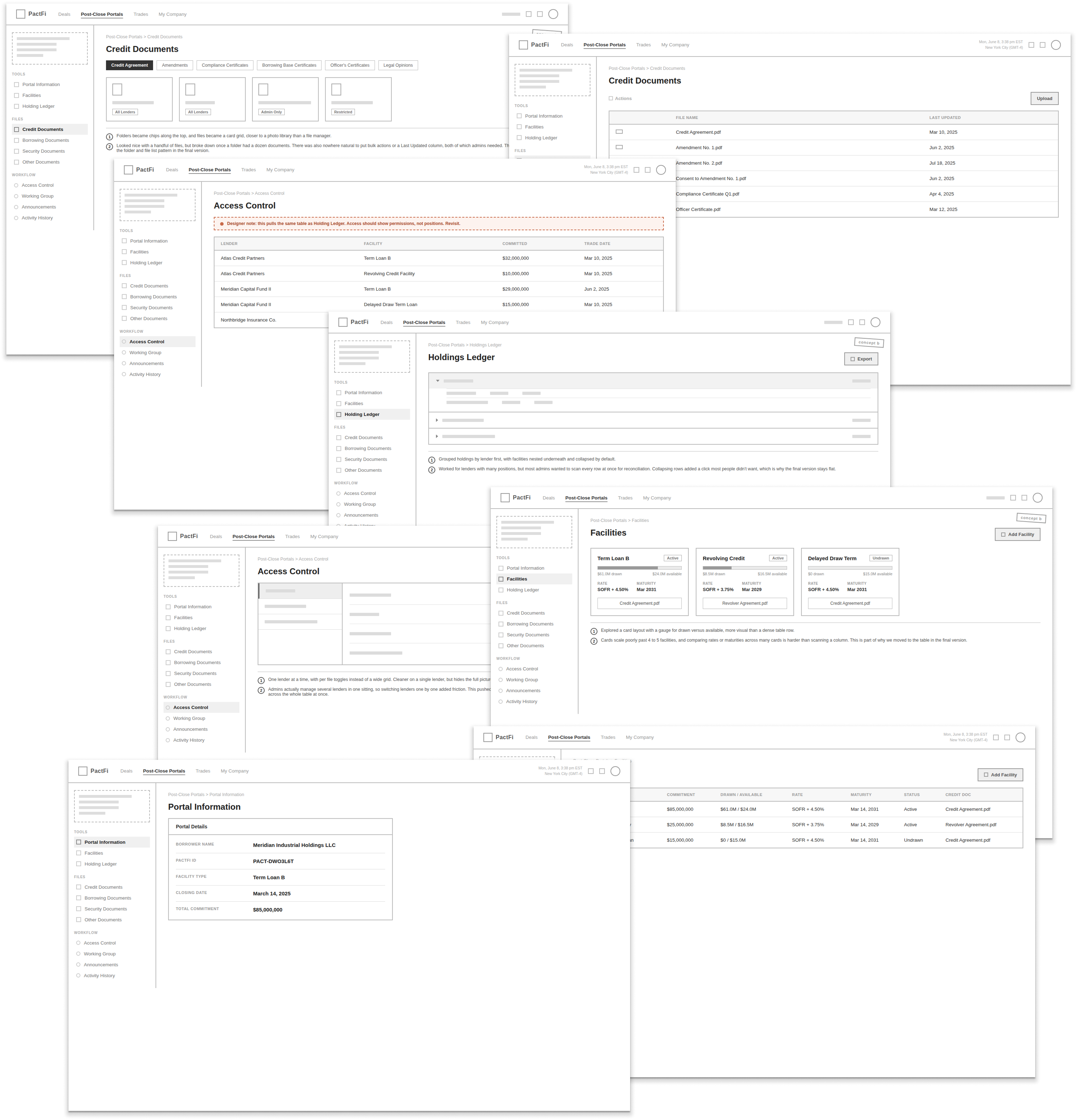
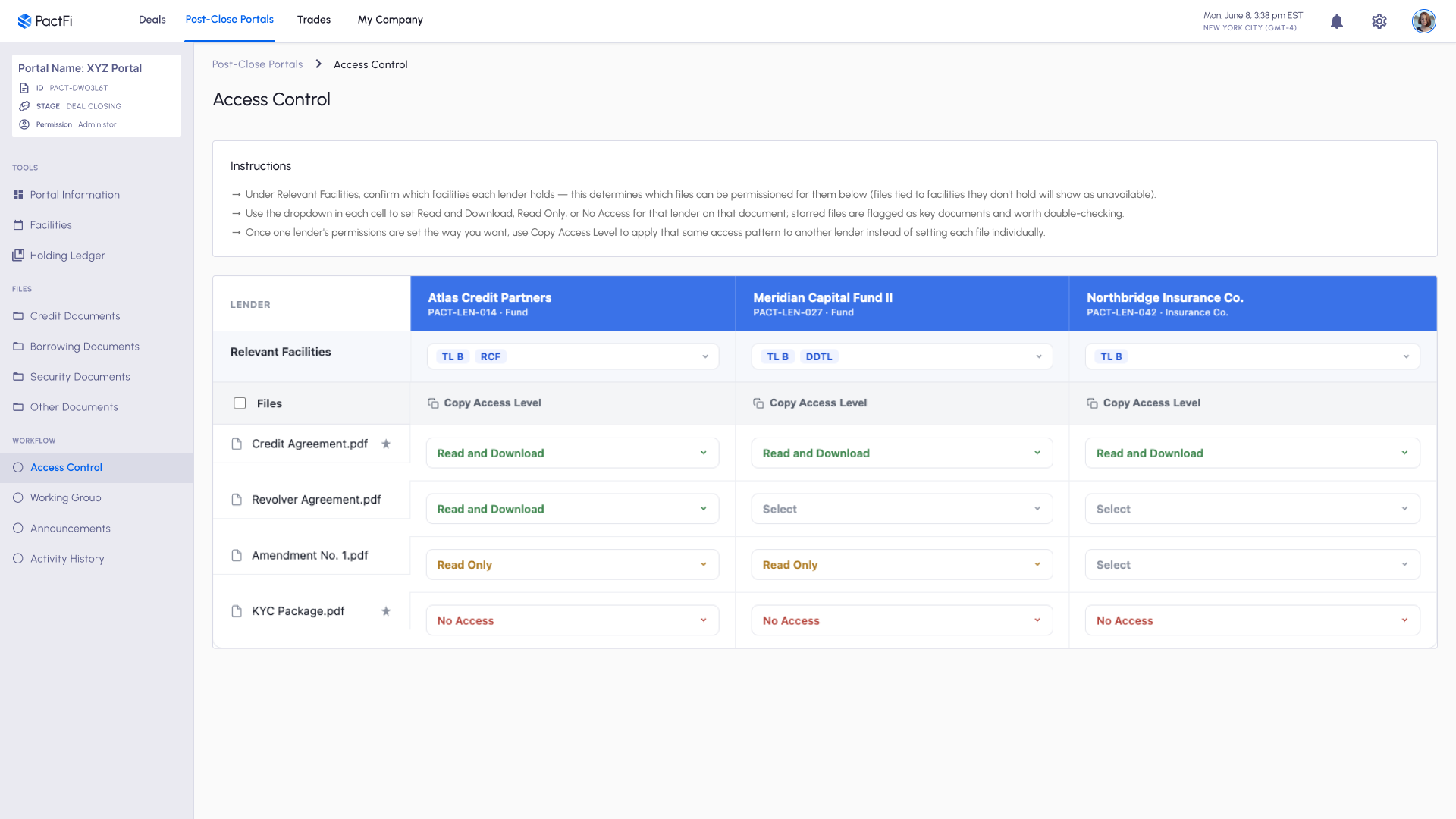
With the low fidelity wireframes validated internally, I moved into high fidelity, building out each screen using PactFi's design system wherever it applied. One of the harder problems to solve at this stage was striking the right balance: automate the repetitive parts of managing access, without stripping away the friction that keeps a sensitive document from landing in front of someone who shouldn't see it.
From there, we took the prototypes directly to clients through live demos instead of relying on internal review alone. The reaction was immediate. Clients loved it. The one thing they asked for was the ability to see their Holdings Ledger and manage their Governing Credit Documents directly, instead of only referencing them from the Facilities page. While this request would be currently out of scope for the MVP, the feedback did help us shape the experience going forward, giving lenders direct visibility into, and control over, the documents that actually govern their position, right alongside everything else in the portal.
AI entered the process after the client demo's and their request to include a way to manager Governing Credit Documents and Holdings Ledger.
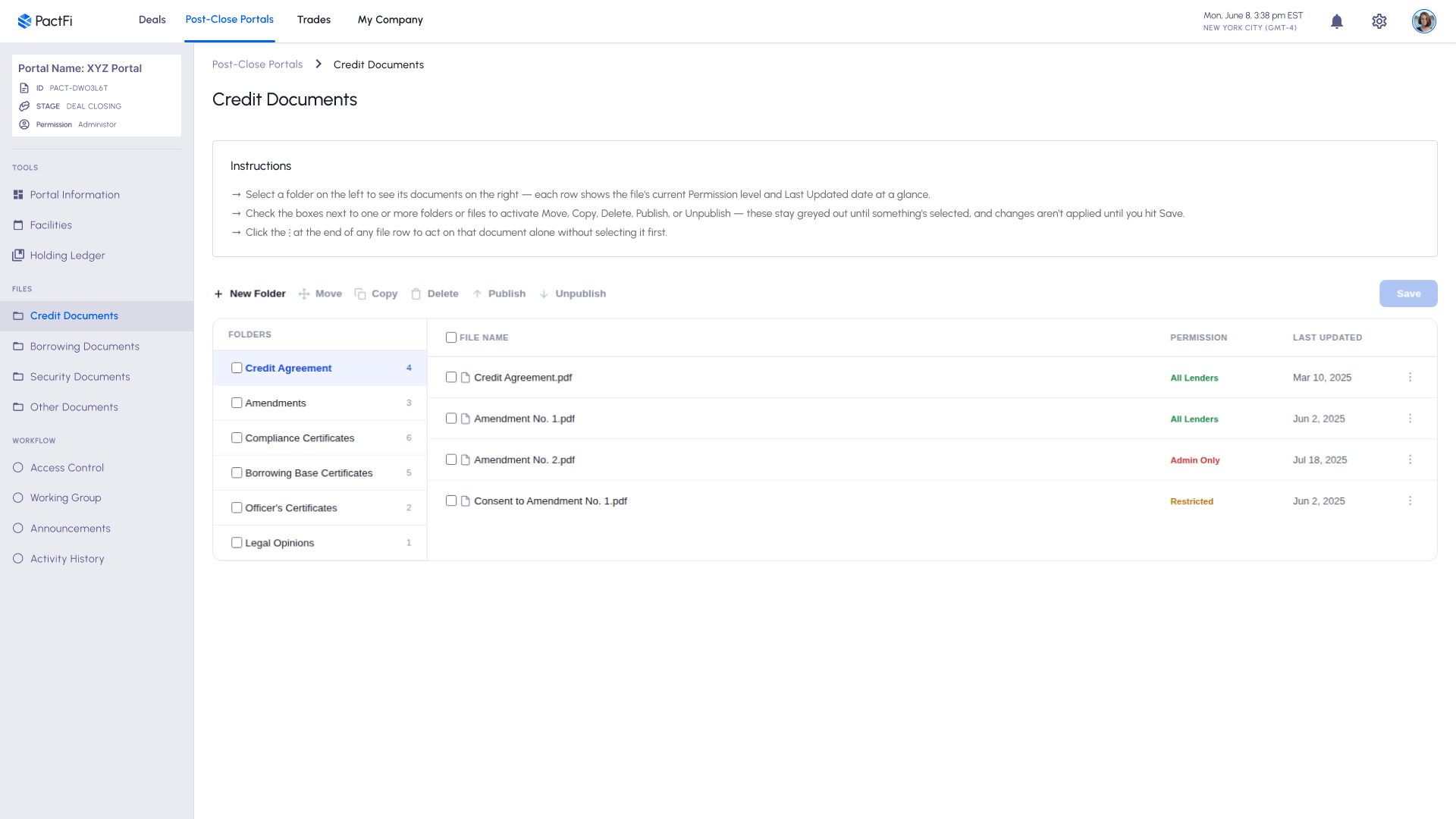
Rather than spending a full design cycle building those two screens from scratch, we used AI to quickly generate working versions of both, built on the same design system and patterns already in place, so we could get them back in front of users for feedback almost immediately. It let us validate a direction in days instead of weeks, without cutting corners on how the screens actually looked or functioned.
With Holdings Ledger and Credit Documents built out using AI, we brought the full set of screens back to users, not to validate what already existed, but to share our vision for how these two pieces would fit into v2 of PCP. The feedback from that round became the foundation for future PRD tickets, shaping what would get built next. Meanwhile, the core designs that had already been validated were handed off to engineering for production.
.png)

.svg)


